Rollkit · Feature flags
Ship behind
a switch.
Self-hosted feature flags that evaluate inside your own process. No deploy to turn something on. No panic to turn it off.
01 · Flip
One flip.
Turn a feature on for one user, a whole team, or a quarter of everyone. No release, no waiting on a pipeline.
02 · Spread
The whole board lights up.
Every service picks the change up on its next poll. Evaluation stays in your process, so a check costs no network call.
03 · Recover
Undo it in a second.
Every change is a versioned snapshot with an audit trail. Something wrong? Switch it off or restore the last good config.Open the app How it works
How it works
From idea to live in six moves.
These are real screens from the running dashboard, not mockups.
- 01
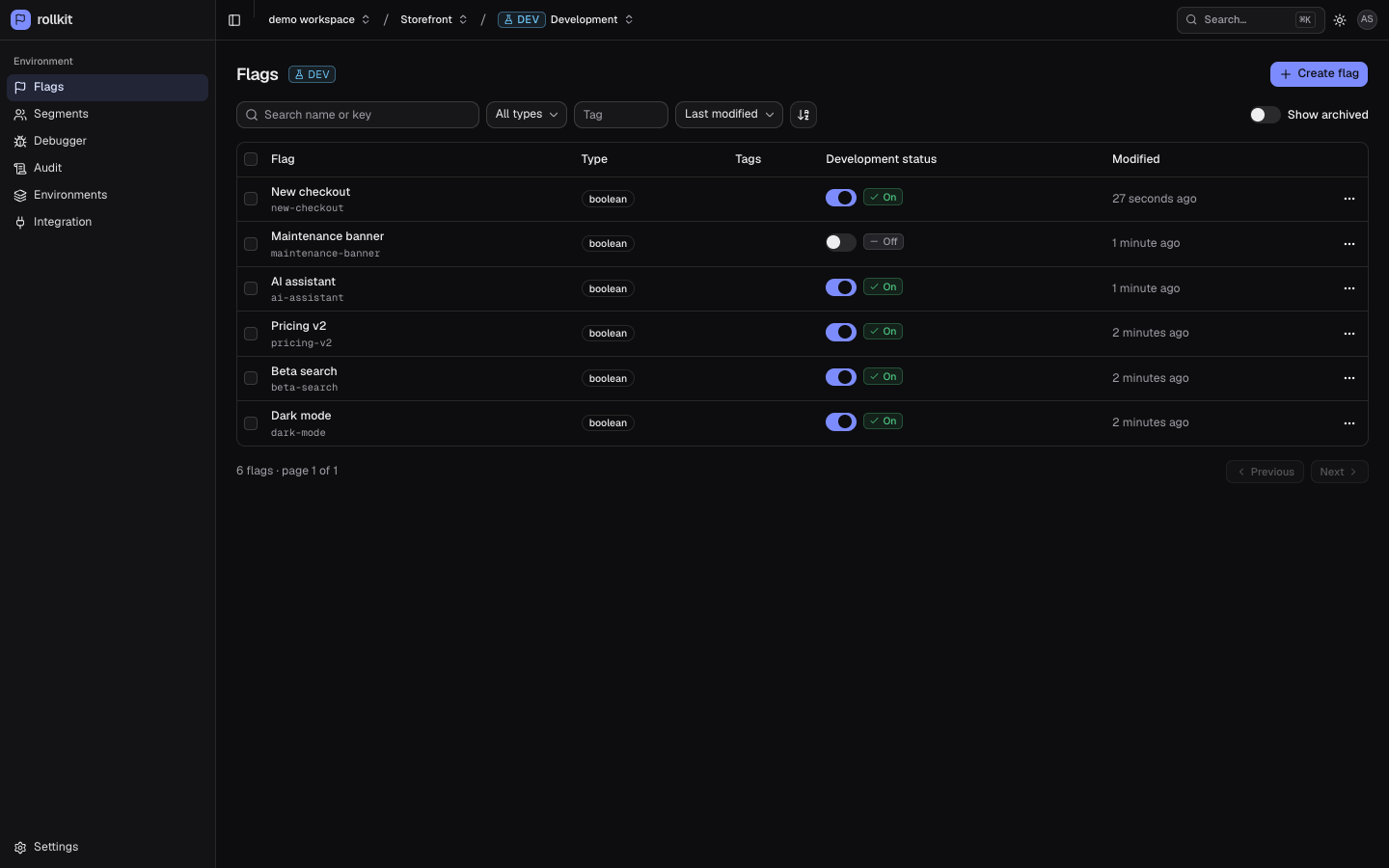
Create a flag
Name it and Rollkit writes the key. Booleans, strings, numbers or JSON, one flag per feature, each with its own state in every environment.
- 02
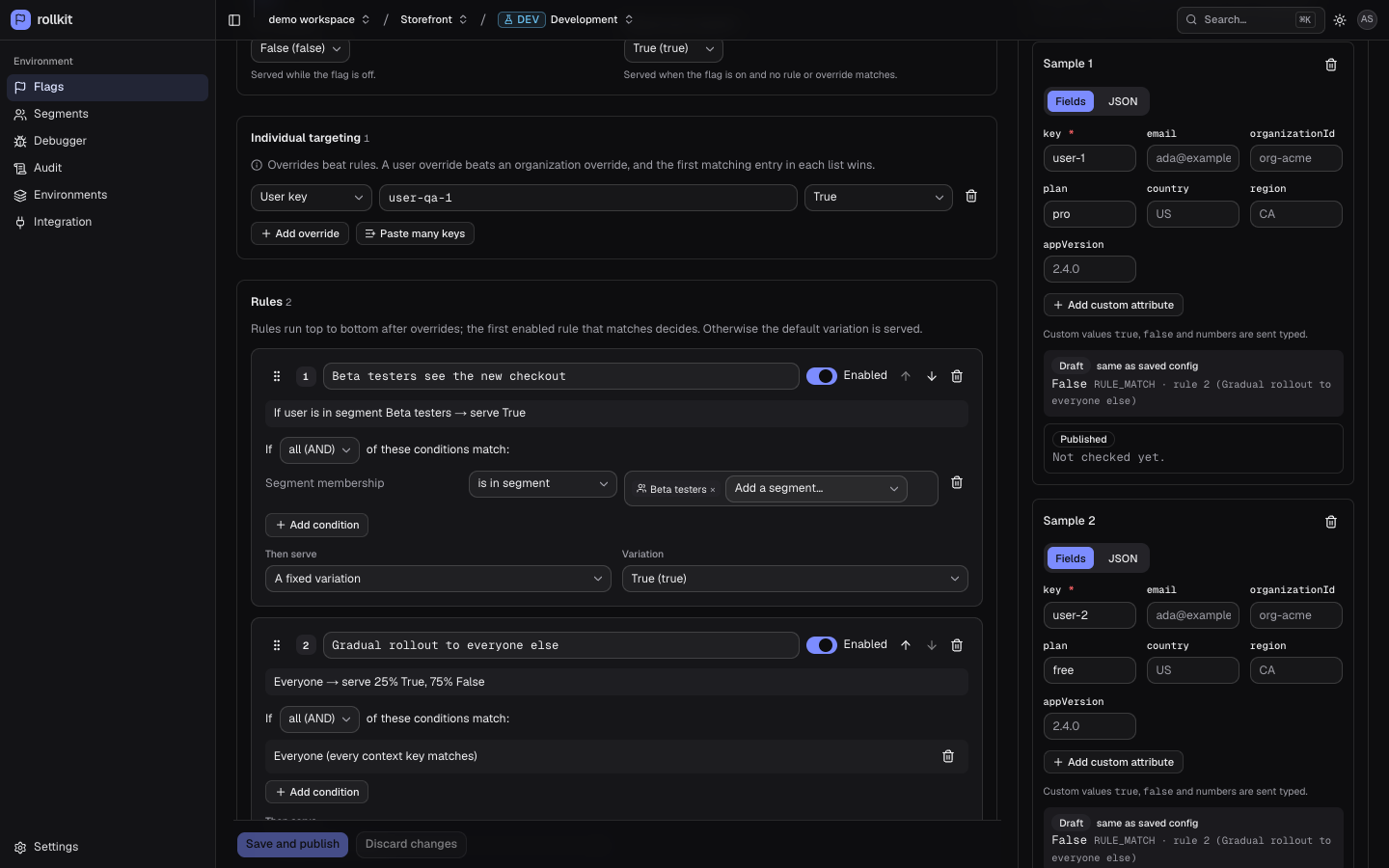
Aim it precisely
Pin one user, match a segment, or roll out to a percentage. Rules run top to bottom and the first match wins, with a live preview of what sample users will get before you publish.
- 03
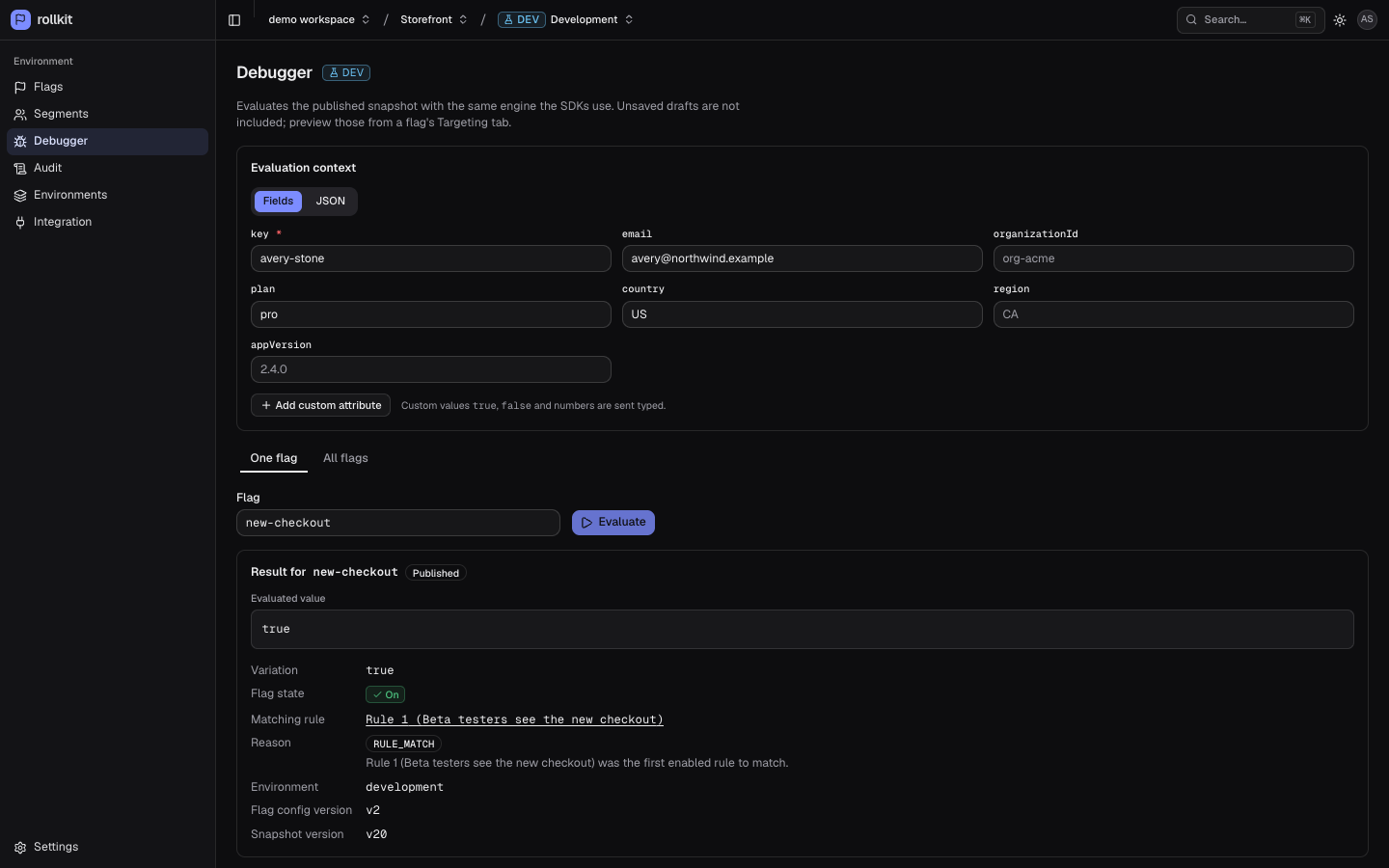
Ask it why
Paste a user, pick a flag, and the debugger shows the value, the reason and the rule that decided it. It runs the same evaluator your servers run.
- 04
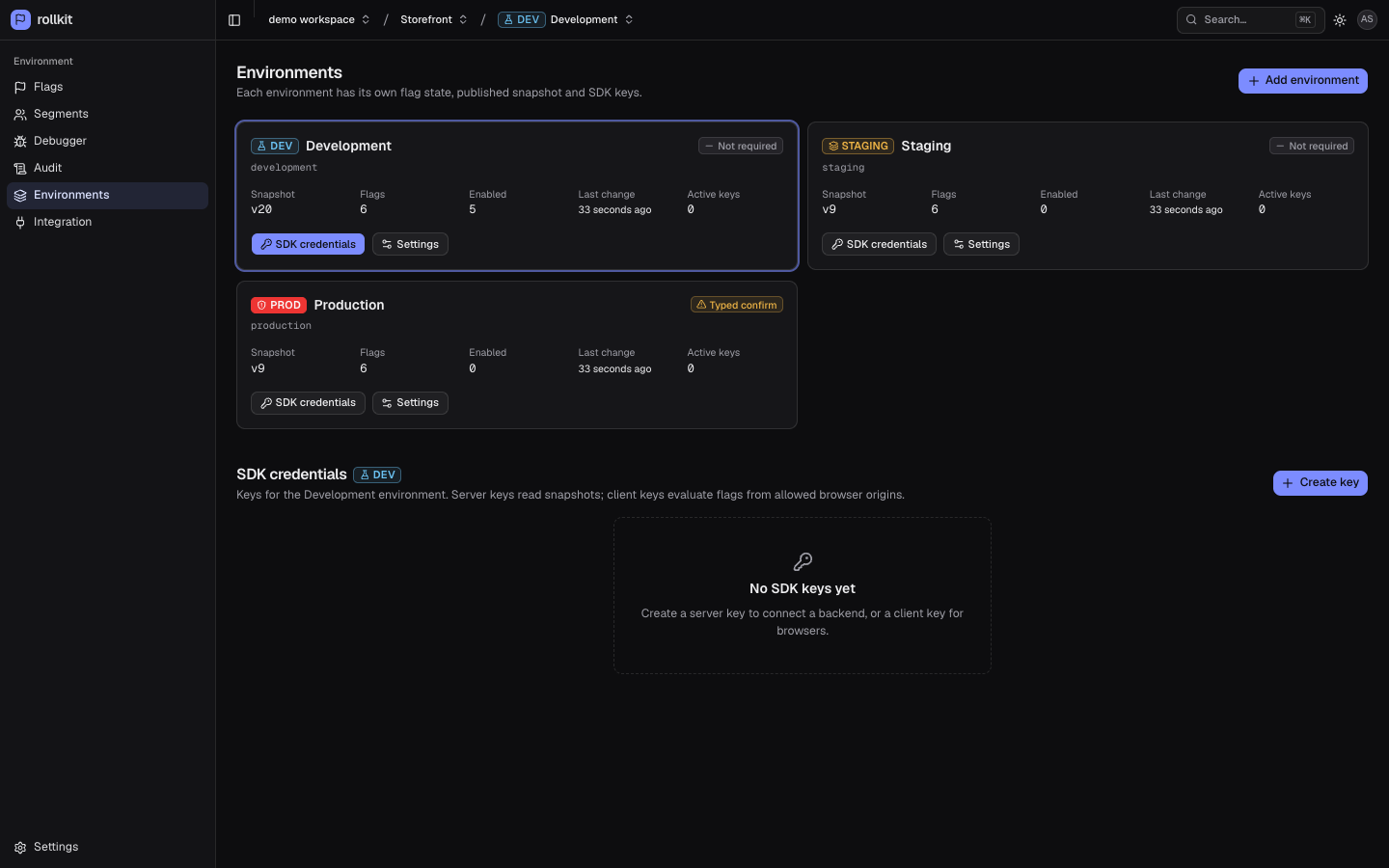
Promote through environments
Development, Staging and Production are separate. Production changes ask for a typed confirmation, so a slip of the mouse cannot ship.
- 05
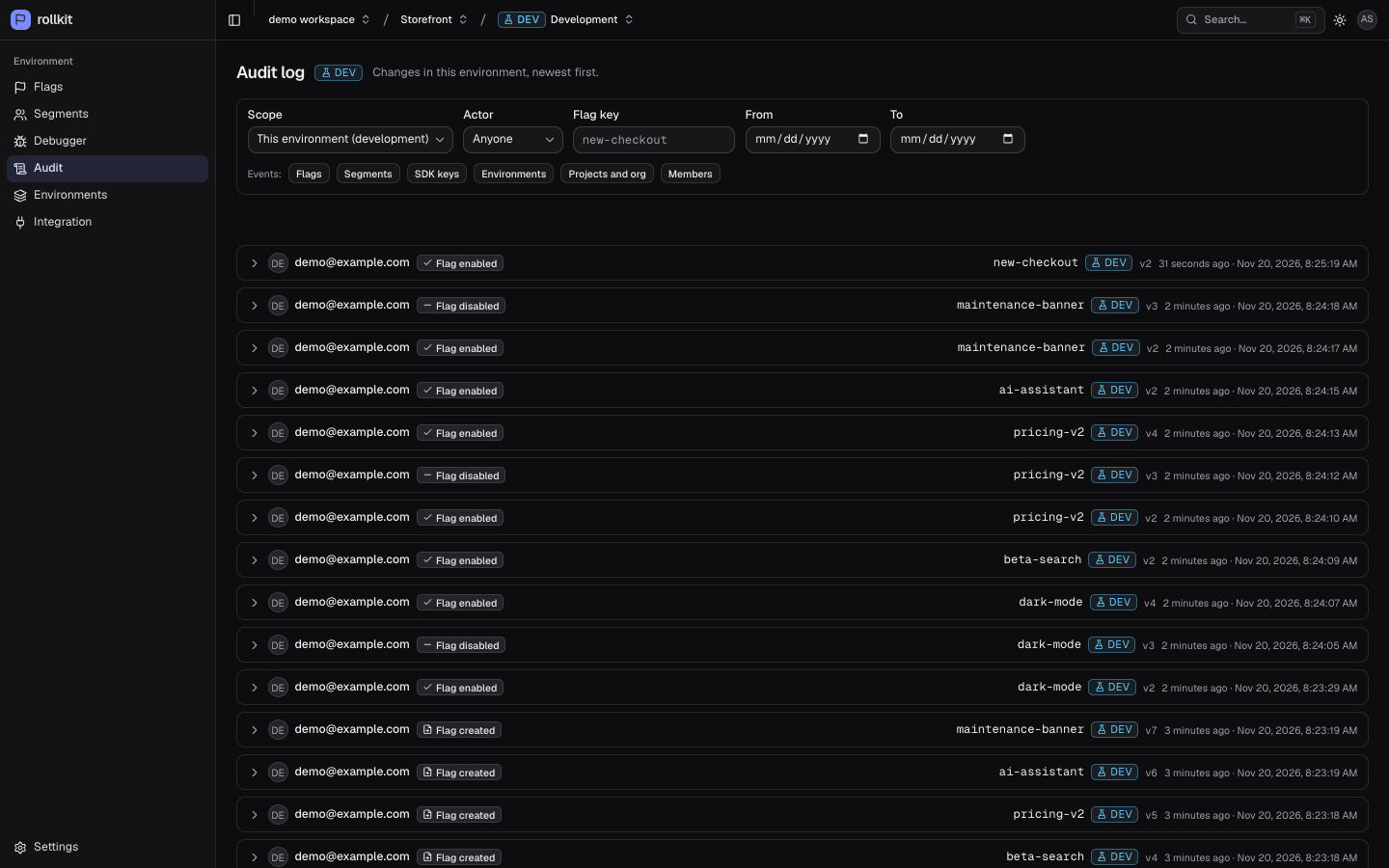
Keep the receipts
Every change is an immutable, versioned snapshot with who, what and when. Restore an earlier config from the audit log.
- 06
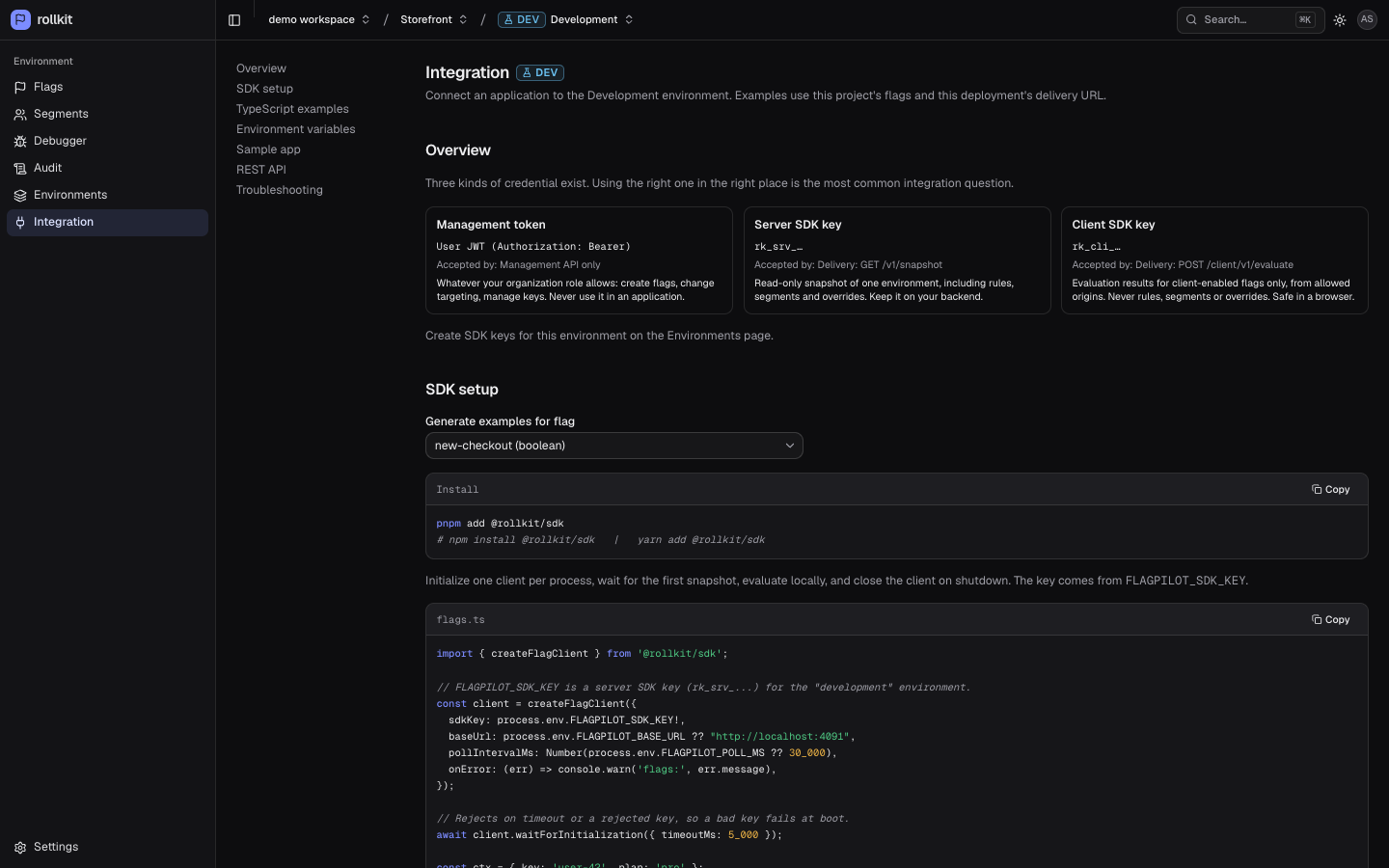
Connect your code
Drop in the Node SDK, or use a client key from the browser. Your servers download a snapshot and evaluate locally from then on.
Try it
Feel a rollout spread.
Press any switch. The change fans out from it, the way a published flag reaches every service that watches the environment.
The SDK
Your flags live in your process.
The client downloads an environment snapshot, keeps it in memory and evaluates locally. A check is a function call. If delivery goes down, the last good snapshot keeps serving.
- Conditional polling: an unchanged environment costs a 304
- Atomic snapshot swap, and a version never moves backwards
- Optional file cache so a restart can evaluate before delivery answers
import { createFlagClient } from '@rollkit/sdk';

const client = createFlagClient({
  sdkKey: process.env.FLAGPILOT_SDK_KEY!,
  baseUrl: 'https://delivery.example.com',
});
await client.waitForInitialization();

// no network call below
const { value, reason } = client.variationDetail(
  'new-checkout', { key: 'user-qa-1', plan: 'pro' }, false
);Illustration of the flag in the screenshots. The real bucketing hash differs; the dashboard debugger shows exact results.
Safety
The big red undo.
The dashboard lists every flag that is live in an environment, front and centre. Switch one off and it is off for everyone on the next poll, with an undo if you were too quick.
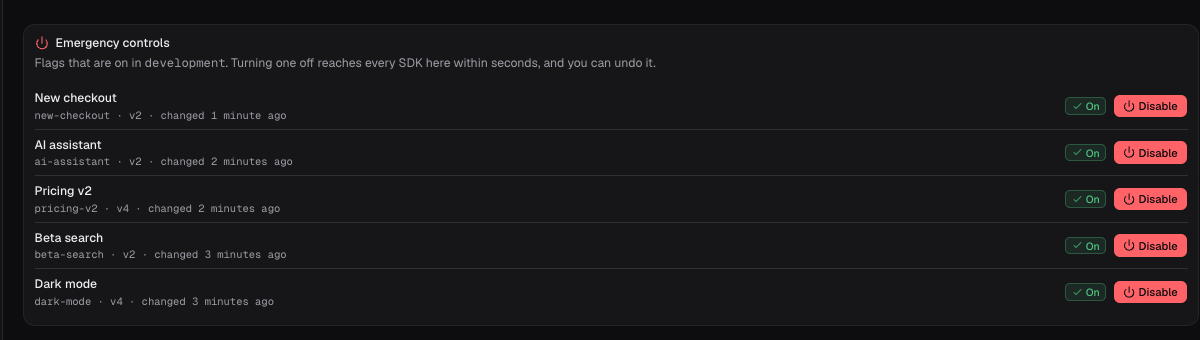
- Typed confirmation in Production
- Undo after switching off
- Audit entry for every change
- Restore an earlier config
Everything you reach for
Small surface. Sharp tools.
Percentage rollouts
Deterministic bucketing: the same user lands in the same bucket on every service.
Segments
Name a group once, reuse it in every rule.
Versioned snapshots
Each publish is immutable. Roll back to any of them.
Four flag types
Boolean, string, number or JSON, each with typed variations.
Environments
Development, Staging and Production, kept apart on purpose.
REST management API
Everything the dashboard does, scriptable from CI.
Yours to run
Your data. Your servers. Your switch.
Rollkit is one Postgres, an API, a delivery service and a dashboard. Run it on your own infrastructure and keep every flag, key and audit entry in your hands.